Water mains (supply pipe) leak detection
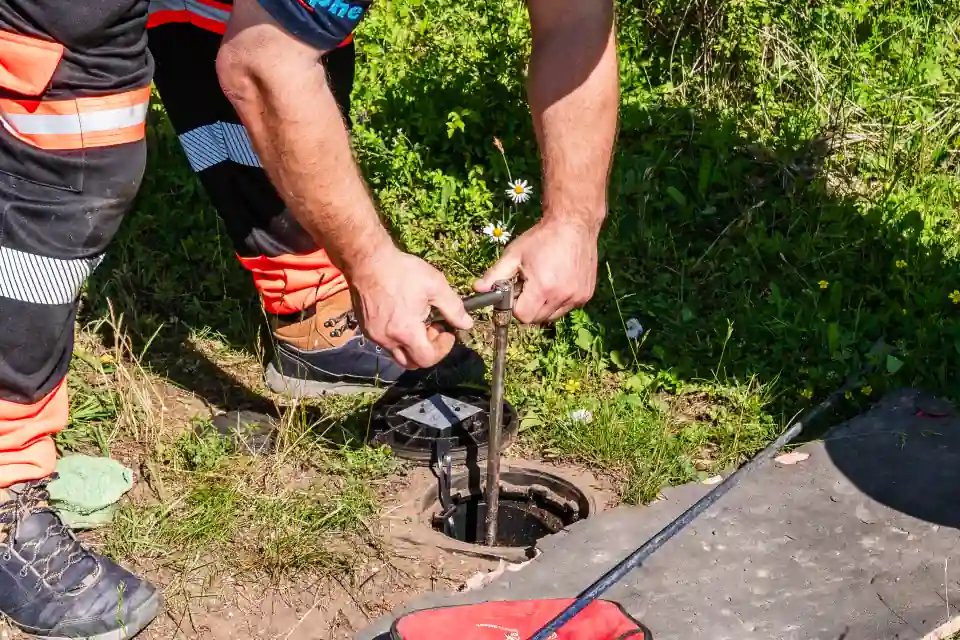
Pinpoints a leak on the private supply pipe, which at a house can run beneath a lawn, a drive or the floor itself, and marks where to dig.
Equipment: acoustic ground microphones and tracer gas
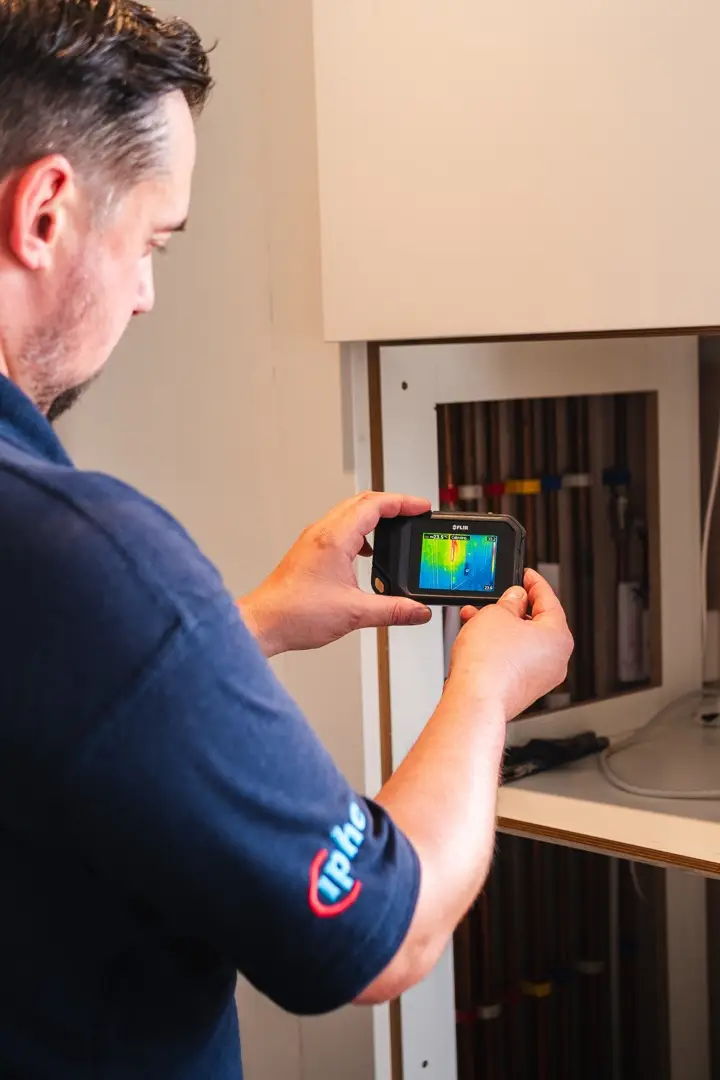
A stained ceiling in a Dumbreck (G41) flat or a wet lawn outside a house can both mean a hidden leak. Based in Giffnock, ADI's engineer Hamaad Janjua pinpoints it from the surface, so there is one place to open. ADI can then repair it with a guarantee if it is in the heating, the plumbing or the supply pipe.




The original leak detection company, est. 2011

Three miles of road, via Mansewood Road and the B769, separate Dumbreck from Giffnock, Hamaad Janjua's base. In the statistical area that covers Kingston West and Dumbreck, about three homes in four were flats at the last count by National Records of Scotland, in 2017. Scottish Water's guidance is that a flat usually has a shared water supply pipe.
Hamaad's title at ADI is Plumbing & Heating and Water Mains Specialist, and his expertise covers both the supply pipe and the plumbing inside a flat or house; he is Gas Safe Registered and City & Guilds qualified. Simon B. describes on Trustpilot how Hamaad found a leak on the water main and then tested the inside of the building for leaks too.
Dumbreck (G41), a conservation area south of the River Clyde, lies across the M77 from Pollokshields and next to Bellahouston and Bellahouston Park. Alongside its flats, the statistical area that includes Dumbreck held almost 350 detached and semi-detached houses in 2017. So a hidden leak here may be on a house's supply pipe or coming through a ceiling from the flat above, and each calls for a different investigation.
Flat or house, every Dumbreck caller speaks to ADI's office team before an engineer is booked.
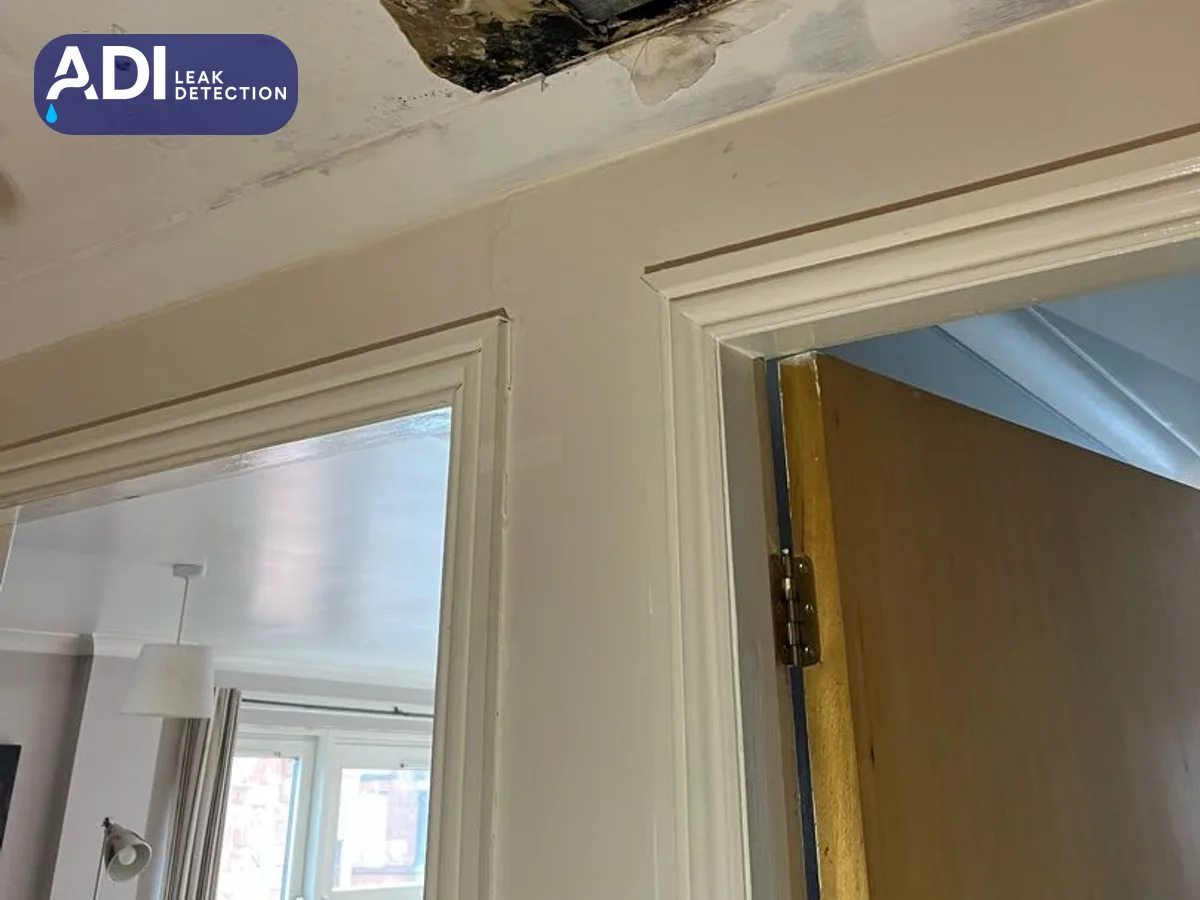
The signs of a hidden leak in a Dumbreck home range from a stained hallway ceiling and a shower tray sinking underfoot to a boiler that needs repressurising, damp skirtings, a wet patch on a path or lawn, fresh stains upstairs after heavy rain and an outside drain that keeps overflowing. Beside each sign sits the investigation that finds where the water is coming from.
| The sign | What it usually means | The investigation |
|---|---|---|
| Damp or flaking plaster on a hallway ceiling | Often the bathroom of the flat above, as in this site's West End case study | Ceiling leak detection |
| A shower tray that sinks or moves underfoot | Failed seals letting water soak into and weaken the floor below the tray | Bathroom leak detection |
| A boiler that needs repressurising more often than it did | Somewhere the heating circuit is losing water: a weeping valve, a corroded radiator or a pipe in a solid floor | Central heating leak detection |
| Skirting boards or floorboards that stay damp to the touch | A leaking cold feed or hot water pipe hidden in the floor void or wall | Hot and cold water pipe leak detection |
| A wet patch on a path or lawn that stays wet in a dry spell | Can be the underground supply pipe, which is the owner's to repair | Water mains (supply pipe) leak detection |
| New stains upstairs after heavy rain | A slipped tile, failed flashing or overflowing gutter | Roof leak detection |
| A gully or drain outside that keeps overflowing | An underground drain cracked or pulled apart | Drainage leak investigation |
Your Dumbreck leak needs whichever of these seven ADI investigations covers where the water is escaping, and under each one is the kit the engineer uses.
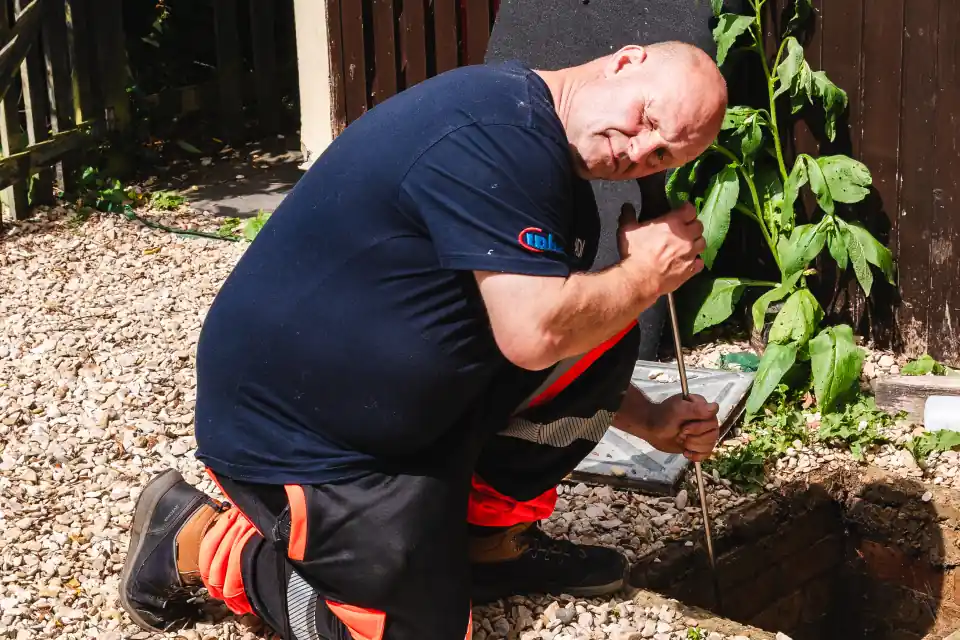
Pinpoints a leak on the private supply pipe, which at a house can run beneath a lawn, a drive or the floor itself, and marks where to dig.
Equipment: acoustic ground microphones and tracer gas
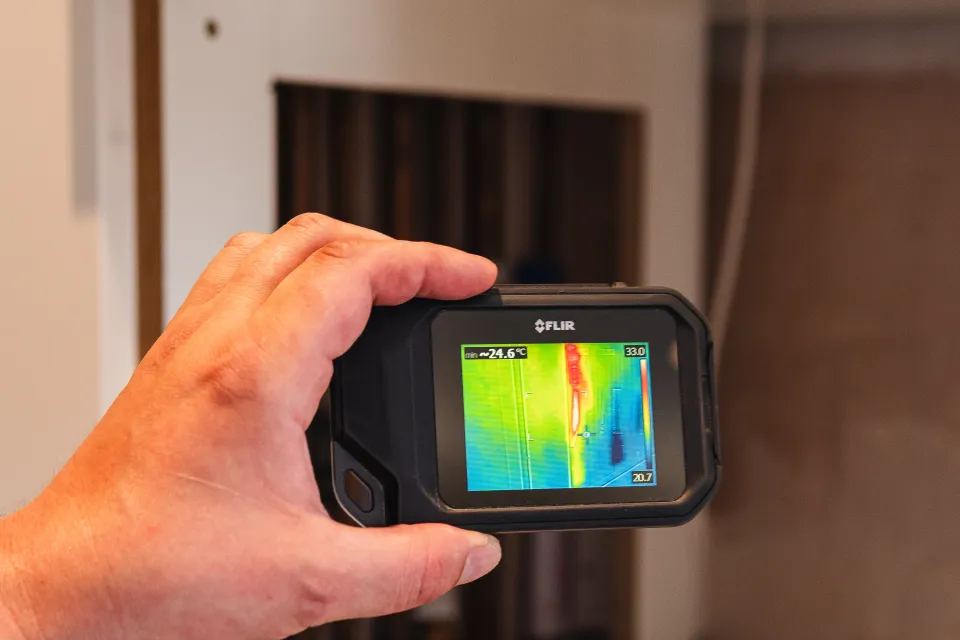
When the boiler keeps needing more pressure, the heating circuit is tested and the leaking radiator, valve or buried pipe is pinned down.
Equipment: tracer gas, thermal imaging and pressure testing
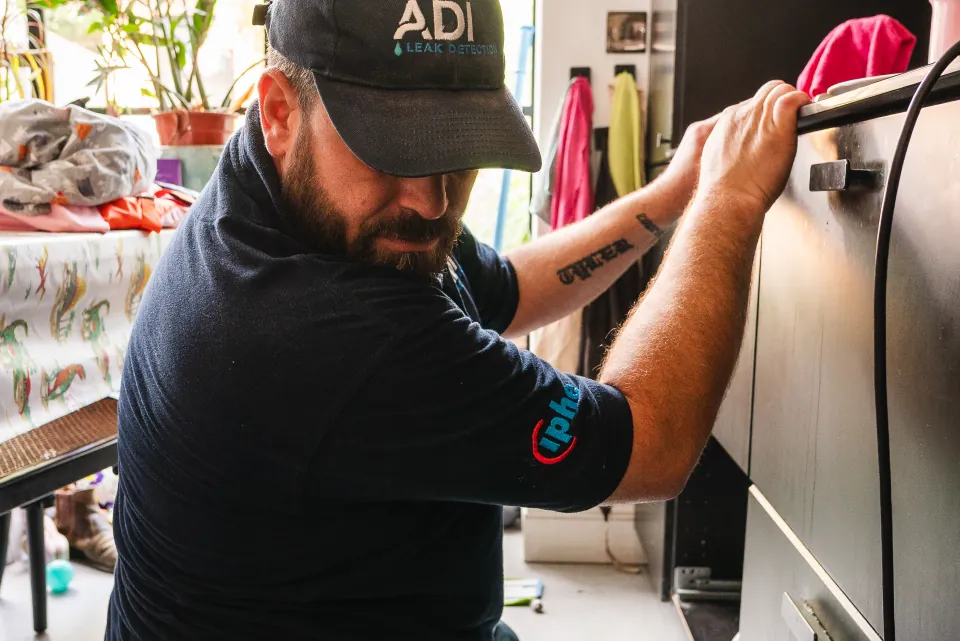
Locates a leak on the cold supply or hot water pipework inside the fabric of the building, so the only hole made is at the marked spot.
Equipment: acoustic listening, thermal imaging, tracer gas and borescope
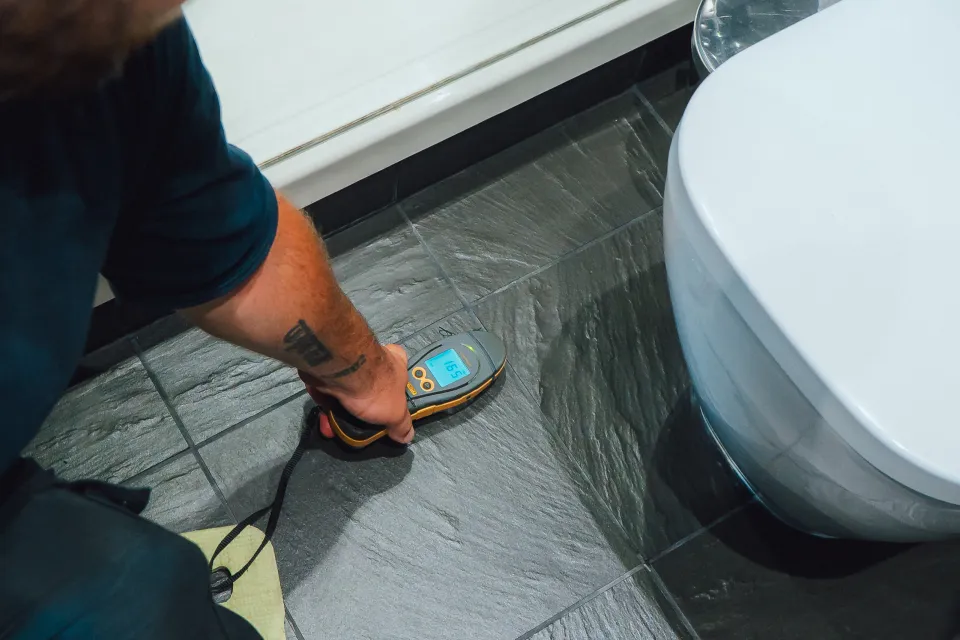
Checks a bathroom or en-suite seal by seal and pipe by pipe, concealed cistern and boxed-in waste included, when damp spreads to the floor or room below.
Equipment: thermal imaging, moisture meters and borescope
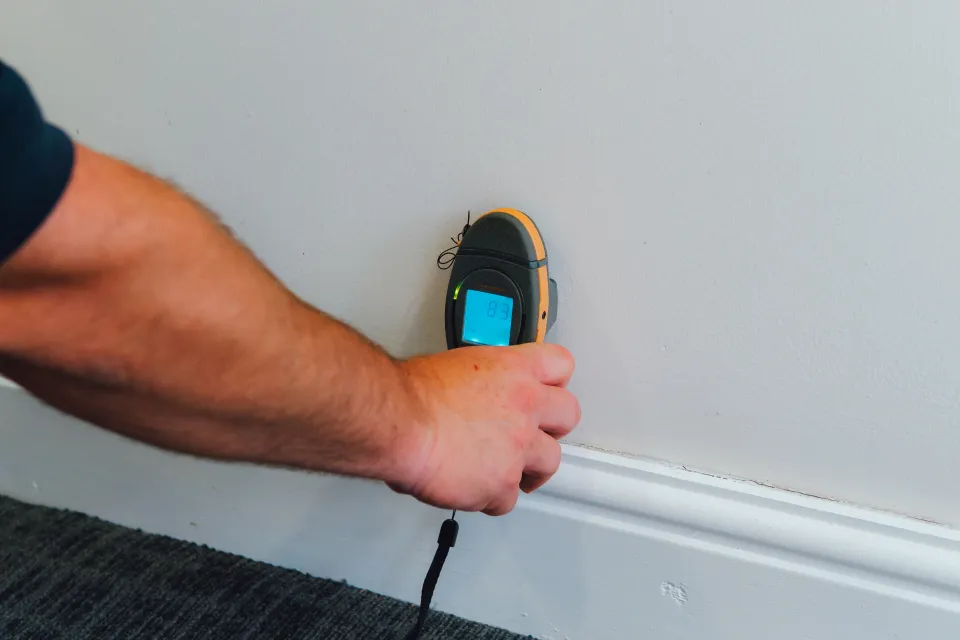
Follows the water marking a ceiling up to where it began: the roof, a bathroom or pipework on a higher floor.
Equipment: thermal imaging, moisture meters and acoustic methods
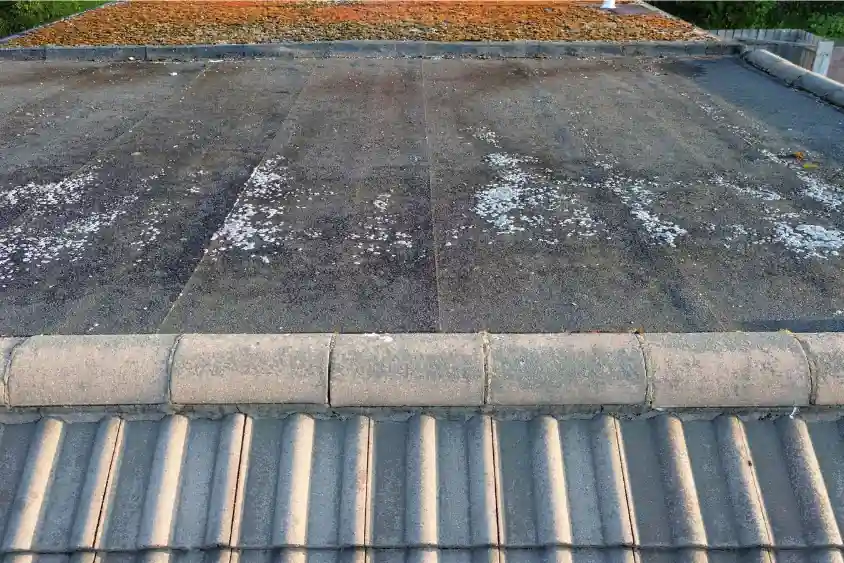
Finds the tile, flashing, gutter or flat-roof membrane letting rain in. ADI locates and reports the leak, and a roofer is the one to repair it.
Equipment: thermal imaging, moisture meters and drone inspection
Inspects the drains, foul and surface water alike, on CCTV, to show where a pipe has cracked or a joint has opened.
Equipment: CCTV drain survey and acoustic listening
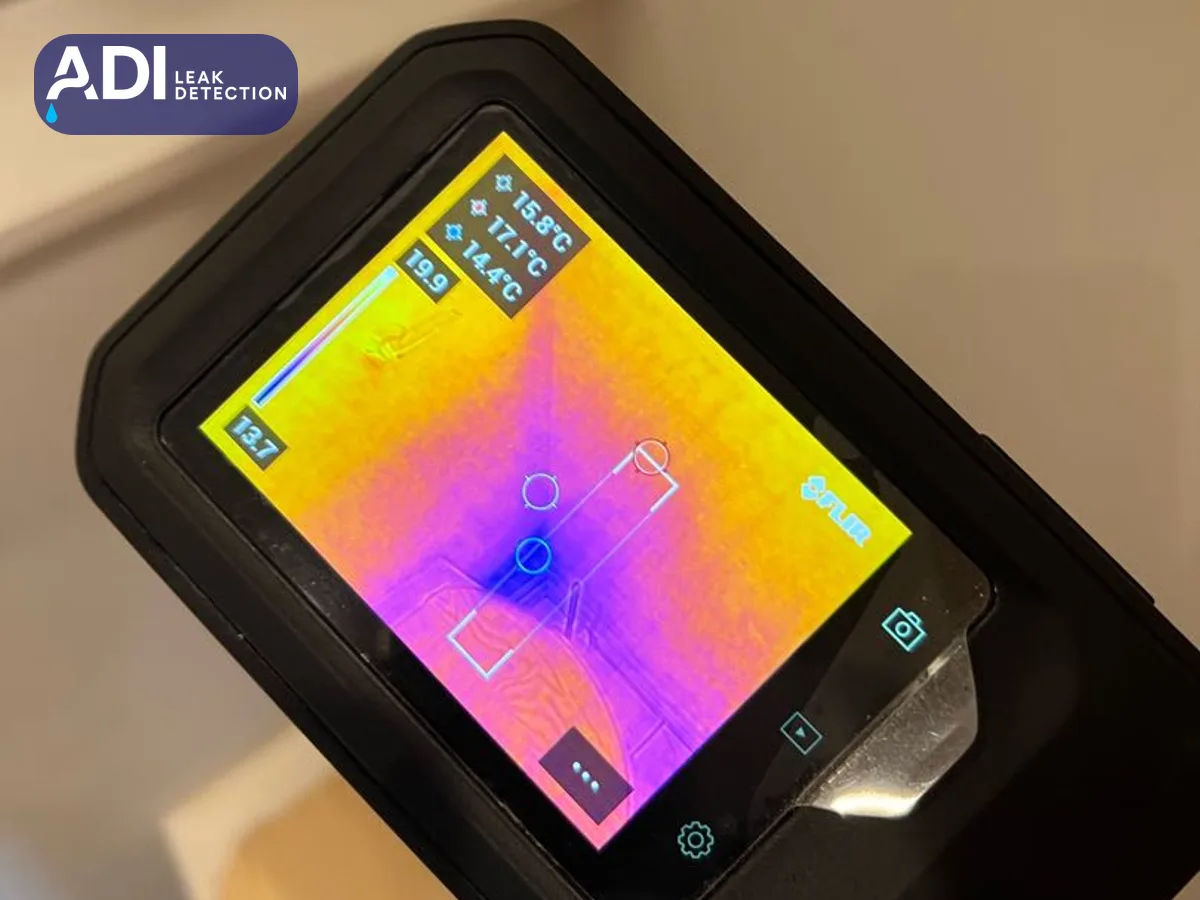
Five non-invasive methods are open to an ADI engineer. On the West End job in the case study, thermal imaging and a damp meter found the wet areas, pressure tests checked the supply, and a seal test found the failure.
With the pipe isolated, tracer gas goes in, and the engineer sweeps a detector over the surface to find where it emerges.
A pressurised leak makes a noise of its own, and acoustic equipment follows it to the source.
A thermal image turns temperature into colour: a hot pipe leak shows warm, soaked plaster cold.
Damp meter readings tell a wet wall from a dry one and mark where the water damage ends.
The borescope's probe bends round joists and pipe runs, sending back pictures from places no one can see into.
Once ADI Leak Detection has found a leak on a heating system, the plumbing or the supply pipe, it can repair it and guarantee the work. Or you can hand the repair to an independent plumber. With roof and structural problems, ADI's role is to pinpoint and report them, and the repair belongs with a roofer or builder.
If ADI does the repair, the engineer who did the tracing can carry it out, having already seen the pipework, the readings and the mark.
Your own plumber can take over from the engineer's mark and written report, which between them show where the leak is. On the West End job in the case study, Hamaad showed the customer the failed seals on site.
The boundary stop cock splits the pipework, and the leak's side decides who pays. Scottish Water's side ends with the stop cock and takes in the water main in the street and the communication pipe; the owner answers for the supply pipe beyond it, to the indoor stop valve. In 2017 the Kingston West and Dumbreck statistical area had about 1,500 flats and 100 terraced houses, and Scottish Water's FAQ says "Flats and older or terraced houses usually have a shared water supply pipe".
Under trace and access cover, which many buildings policies include, the insurer meets the cost of finding the leak and getting to it, within a limit that varies by policy.
Your insurer receives the report as written by the engineer who came out, with photographs and video, in a form fit for "Trace and Access" and "Escape of Water" claims.
Talk your leak over with ADI's office team on 0141 363 0314 before you decide which investigation to book.
Call 0141 363 0314Straight from Trustpilot, three reviews that mention Hamaad by name.
We had David at ADI book us in for a leak on the water main and next day Hamaad arrived and found the leak, he also then tested the internal building for leaks. Great service Both David and Hamaad were professional and friendly.
Read on TrustpilotGreat service from Hamaad. Professional, knowledgeable and found the leak quickly. Came prepared and communicated really well with our onsite team. Would gladly work with him again.
Read on TrustpilotHamaad was brilliant the minute he walked in. He knew exactly what he is doing. He explained everything clearly, he also gave me a lot of advice. He was on time, responsible, respectful and well experienced! Now I can safely go on to do my next step! Thanks again Hamaad! Take care
Read on Trustpilot